Showing posts with label Music. Show all posts
Showing posts with label Music. Show all posts
Saturday, June 8, 2013
Two Mexican pop stars
Julieta Venegas and Natalia Lafourcade went retro for their latest releases—in part as a reaction against the grim headlines often seen as defining their country in the present.

Thursday, January 17, 2013
Monday, December 24, 2012
Parisian Thoroughfare
http://en.wikipedia.org/wiki/Pierre_Michelot
http://en.wikipedia.org/wiki/Clifford_Brown_%26_Max_Roach
Max & Clifford: Cherokee
Max Roach Quintet Parisian Thoroughfare
I can't get started
Brownie: Smoke get sin your eyes
Quicksilver
Donna Less: Brownie's very last recording
Prez: Polka dots and Moonbeams
http://en.wikipedia.org/wiki/Clifford_Brown_%26_Max_Roach
Max & Clifford: Cherokee
Max Roach Quintet Parisian Thoroughfare
I can't get started
Brownie: Smoke get sin your eyes
Quicksilver
Donna Less: Brownie's very last recording
Prez: Polka dots and Moonbeams
Saturday, June 9, 2012
Tina Brooks
Heard a song, on Rhonda Hamilton's WBGO show, featuring his saxophone as I drove to work on Thursday 7 June.
 Photo by Francis Wolff © Mosaic Images
Harold Floyd "Tina" Brooks (June 7, 1932 – August 13, 1974) was an American hard bop tenor saxophonist and composer.
Harold Floyd "Tina" Brooks (June 7, 1932 – August 13, 1974) was an American hard bop tenor saxophonist and composer.
Wednesday, March 28, 2012
Vibe and xylo
On the ride to work today I heard music of Thelonious Monk on WKCR. Specifically, a three song set (perhaps this one) that includes Milt Jackson set me to thinking: what is the difference between a vibraphone and a xylophone.
 First, the vibraphone (also known as the vibraharp or simply the vibes) is a musical instrument in the struck idiophone subfamily of the percussion family. So even claves are an idiophone.
An idiophone is any musical instrument which creates sound primarily by way of the instrument's vibrating, without the use of strings or membranes.
The vibraphone is similar in appearance to the xylophone, marimba and glockenspiel. Each bar is paired with a resonator tube having a motor-driven butterfly valve at its upper end, mounted on a common shaft, which produces a tremolo or vibrato effect while spinning. The vibraphone also has a sustain pedal similar to that used on a piano; when the pedal is up, the bars are all damped and the sound of each bar is shortened; with the pedal down, they will sound for several seconds.
A xylophone is a musical instrument in the percussion family that consists of wooden (not steel) bars struck by mallets. Each bar is an idiophone tuned to a pitch of a musical scale, whether pentatonic or heptatonic in the case of many African and Asian instruments, diatonic in many western children's instruments, or chromatic for orchestral use. The term may be used generally, to include all such instruments, such as the marimba and balafon or, more specifically, to refer to an orchestral instrument of somewhat higher pitch range than the chromatic marimba. It is sometimes mistakenly used of similar lithophones and metallophone instruments of the glockenspiel type such as the pixiphone.
A pentatonic scale is a musical scale with five notes per octave in contrast to a heptatonic (seven note) scale such as the major scale and minor scale.

An idiophone is any musical instrument which creates sound primarily by way of the instrument's vibrating, without the use of strings or membranes.
The vibraphone is similar in appearance to the xylophone, marimba and glockenspiel. Each bar is paired with a resonator tube having a motor-driven butterfly valve at its upper end, mounted on a common shaft, which produces a tremolo or vibrato effect while spinning. The vibraphone also has a sustain pedal similar to that used on a piano; when the pedal is up, the bars are all damped and the sound of each bar is shortened; with the pedal down, they will sound for several seconds.
A xylophone is a musical instrument in the percussion family that consists of wooden (not steel) bars struck by mallets. Each bar is an idiophone tuned to a pitch of a musical scale, whether pentatonic or heptatonic in the case of many African and Asian instruments, diatonic in many western children's instruments, or chromatic for orchestral use. The term may be used generally, to include all such instruments, such as the marimba and balafon or, more specifically, to refer to an orchestral instrument of somewhat higher pitch range than the chromatic marimba. It is sometimes mistakenly used of similar lithophones and metallophone instruments of the glockenspiel type such as the pixiphone.
A pentatonic scale is a musical scale with five notes per octave in contrast to a heptatonic (seven note) scale such as the major scale and minor scale.
Friday, January 6, 2012
Woody welcomed home
Oklahoma has always had a troubled relationship with her native son Woody Guthrie. The communist sympathies of America’s balladeer infuriated local detractors. In 1999 a wealthy donor’s objections forced the Cowboy Museum in Oklahoma City to cancel a planned exhibition on Guthrie organized by the Smithsonian Institution. It wasn’t until 2006, nearly four decades after his death, that theOklahoma Hall of Fame got around to adding him to its ranks. But as places from California to the New York island get ready to celebrate the centennial of Guthrie’s birth, in 2012, Oklahoma is finally ready to welcome him home. The George Kaiser Family Foundation in Tulsa plans to announce this week that it is buying the Guthrie archives from his children and building an exhibition and study center to honor his legacy.

While this poor folks’ hero and the richest man in Oklahoma might not seem to have much in common, Mr. Kaiser’s foundation, with its $4 billion endowment, is dedicated to helping Tulsa’s most disadvantaged. “I cried for an hour after meeting George Kaiser,” Ms. Guthrie said. “This puts together what I’ve always dreamed of.”

While this poor folks’ hero and the richest man in Oklahoma might not seem to have much in common, Mr. Kaiser’s foundation, with its $4 billion endowment, is dedicated to helping Tulsa’s most disadvantaged. “I cried for an hour after meeting George Kaiser,” Ms. Guthrie said. “This puts together what I’ve always dreamed of.”
Wednesday, December 28, 2011
Bolívarian musicians

Tunstall, Tricia. (2012). Changing lives: Gustavo Dudamel, El Sistema, and the transformative power of music.
New York: Norton.
Tuesday, June 21, 2011
Friday, April 29, 2011
33 Revolutions Per Minute

The lively British rock critic Dorian Lynskey — he writes for The Guardian, among other publications — spends some time in his new book, “33 Revolutions Per Minute,” chewing over why most protest songs are heaped with scorn. They can be “didactic, crass or plain boring,” he writes. Those who warble them onstage can seem “shrill or annoying or egotistical.” Lester Bangs didn’t single out James Taylor’s politics in his hilarious 1971 essay “James Taylor Marked for Death.” (That essay is barely about Mr. Taylor.) But bad protest songs really do make you want to throttle someone.
Tuesday, April 12, 2011
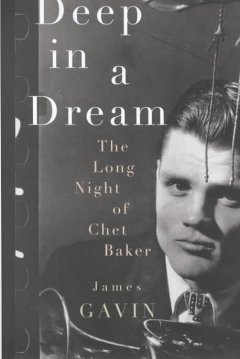
Deep in a dream
Saturday, March 26, 2011
Happy St. Patrick's Day
This is quite a twist on an old tale. Listening to The Essential Chieftains, a greatest hits CD of the Celtic group, I saw this video clip: Expedition 27 Flight Engineer Catherine Coleman delivers a St. Patrick's Day message from the International Space Station.
Wednesday, March 9, 2011
Clapton’s Magic, for Sale

Why would someone create a replica of Eric Clapton's beloved Fender Stratocaster, named Blackie, complete with every single nick and scratch, including the wear pattern from Mr. Clapton's belt buckle and the burn mark from his cigarettes? And why is that replica expected to fetch at least $20,000 at auction, probably much more?
Coz they got no life? And money to burn?
Fortunately, social scientists have been hard at work on the answers. After conducting experiments and interviewing guitar players and collectors, they have just published papers analyzing “celebrity contagion” and “imitative magic,” not to mention “a dynamic cyclical model of fetishization appropriate to an age of mass-production.”
If Clapton touched it, the guitar has magic. If it resembles what Clapton touched, it also has a certain sort of magic.
Some bidders might rationalize their purchases as good investments, or as objects that are worth having just because they provide pleasant memories and mental associations of someone they admire. But those do not seem to be the chief reasons for buying celebrity memorabilia, according to a team of psychologists at Yale.
Thursday, January 13, 2011
Sonata
a musical composition of 3 or 4 movements of contrasting forms. Beethovern wrote many. Andras Schiff has recorded them.


Wednesday, December 29, 2010
Searching new music for Keepers
“Most of the music we play,” a musician who specializes in contemporary works told me recently, “is not great. Some of it is very good, but it lacks something. It falls short. But we need to play it — not only because something great may turn up, and if we don’t play it, we won’t know it, but also because this is the music being composed now, and it ought to be heard.”
Many of their colleagues seem content to keep grinding out Tchaikovsky, Beethoven and Brahms concertos, with little concern for new works. But it is becoming clear to more and more musicians, especially younger ones, that if they are going to have careers — or even a field to have careers in — they cannot keep playing the pillars of the standard canon over and over, spectacular though those works may be.
Absolutely. There are simply so many times I can listen to Take the A train before yearning for something different. Then again, when I hear Mood Indigo ... still, innovation is important.
Many of their colleagues seem content to keep grinding out Tchaikovsky, Beethoven and Brahms concertos, with little concern for new works. But it is becoming clear to more and more musicians, especially younger ones, that if they are going to have careers — or even a field to have careers in — they cannot keep playing the pillars of the standard canon over and over, spectacular though those works may be.
Absolutely. There are simply so many times I can listen to Take the A train before yearning for something different. Then again, when I hear Mood Indigo ... still, innovation is important.
Wednesday, December 8, 2010
John Lennon
30 years ago today (not "It was twenty years ago today, Sgt. Pepper taught the band to play") John was shot and killed.
Ray Davies writes: It had just turned December on the Upper West Side of Manhattan. I was on my customary morning jog, heading out of Central Park toward 72nd Street. The sun was out but it was treacherous underfoot. I’d slipped on some ice and gone tumbling, to be rescued by a group of college boys.
“Are you all right, sir?” they asked, sounding concerned in a way that indicated that I might have looked frail, fragile and quite possibly old. I felt like saying, “Of course I’m all right, man, can’t you see that I am a globe-trotting rock star?” But I saw the genuine concern in the boys’ faces and thanked them, cautiously continuing my run.
Poignant seems too much of a cliché, but so it is.
Yoko Ono writes: The most important gift we received from him was not words, but deeds. He believed in Truth, and had dared to speak up. We all knew that he upset certain powerful people with it. But that was John. He couldn’t have been any other way. If he were here now, I think he would still be shouting the truth. Without the truth, there would be no way to achieve world peace.
On this day, the day he was assassinated, what I remember is the night we both cracked up drinking tea.
They say teenagers laugh at the drop of a hat. Nowadays I see many teenagers sad and angry with each other. John and I were hardly teenagers. But my memory of us is that we were a couple who laughed.
Another appreciation: We remember what we remember of Lennon, and of that night. When I was young, he was the only adult that mattered outside my family — the Beatle of Beatles. I loved his wit; his irony; his “Help!”; his urgent, reedy voice; his unceasing transformations. Like everyone else who loved him, I can’t help grieving, even now, for all the transformations we lost 30 years ago when John Lennon was only 40.
A nice picture gallery at the Washington Post. And another tribute. And a gallery of pictures from 1980: curious to see an NYPD officer wearing a tie.
 Took out and watched The U.S. vs John Lennon.Very enjoyable, touched a nostalgic nerve.
His books include Skywriting by word of mouth, and other writings, including The ballad of John and Yoko, and In his own write & A Spaniard in the works.
Ray Davies writes: It had just turned December on the Upper West Side of Manhattan. I was on my customary morning jog, heading out of Central Park toward 72nd Street. The sun was out but it was treacherous underfoot. I’d slipped on some ice and gone tumbling, to be rescued by a group of college boys.
“Are you all right, sir?” they asked, sounding concerned in a way that indicated that I might have looked frail, fragile and quite possibly old. I felt like saying, “Of course I’m all right, man, can’t you see that I am a globe-trotting rock star?” But I saw the genuine concern in the boys’ faces and thanked them, cautiously continuing my run.
Poignant seems too much of a cliché, but so it is.
Yoko Ono writes: The most important gift we received from him was not words, but deeds. He believed in Truth, and had dared to speak up. We all knew that he upset certain powerful people with it. But that was John. He couldn’t have been any other way. If he were here now, I think he would still be shouting the truth. Without the truth, there would be no way to achieve world peace.
On this day, the day he was assassinated, what I remember is the night we both cracked up drinking tea.
They say teenagers laugh at the drop of a hat. Nowadays I see many teenagers sad and angry with each other. John and I were hardly teenagers. But my memory of us is that we were a couple who laughed.
Another appreciation: We remember what we remember of Lennon, and of that night. When I was young, he was the only adult that mattered outside my family — the Beatle of Beatles. I loved his wit; his irony; his “Help!”; his urgent, reedy voice; his unceasing transformations. Like everyone else who loved him, I can’t help grieving, even now, for all the transformations we lost 30 years ago when John Lennon was only 40.
A nice picture gallery at the Washington Post. And another tribute. And a gallery of pictures from 1980: curious to see an NYPD officer wearing a tie.

His books include Skywriting by word of mouth, and other writings, including The ballad of John and Yoko, and In his own write & A Spaniard in the works.
Wednesday, October 6, 2010
Giant steps

Giant steps -- Cousin Mary -- Countdown -- Spiral -- Syeeda's song flute -- Naima -- Mr. P.C.
I've been listening to it recently; magnificent music.
Wednesday, August 18, 2010
One hit wonders of the '50s & '60s.

Q 784.5 O
Songs:
Alley cat song -- Angel of the morning -- Apache -- Theme from Baby, the rain must fall -- The birds and the bees -- Bobby's girl -- Book of love -- Chantilly lace -- The deck of cards -- Dominique -- Eve of destruction -- Grazing in the grass -- Guitar boogie shuffle -- Happy, happy birthday baby -- Harper Valley P.T.A. -- I like it like that -- Israelites -- Leader of the laundromat -- Let me go lover! -- Love (can make you happy) -- May the bird of paradise fly up your nose -- More -- More today than yesterday -- Na na hey hey kiss him goodbye -- On top of spaghetti -- Pipeline -- Pretty little angel eyes -- Sea of love -- Silhouettes -- Stay -- Stranger on the shore -- Sukiyaki -- Tie me kangaroo down sport -- Who put the bomp (in the bomp ba bomp ba bomp) -- The worst that could happen.
Saturday, June 26, 2010
In search of Beethoven
Genius explored. Some interesting scenes with Gianandrea Noseda, Emanuel Ax, Hélène Grimaud. Lots of talk, some rapture. In one set of scenes Maestro Noseda conducts Filarmonica della Scala in Beethoven's Opus 55, Symphony no.3 in E flat major "Eroica" with vim and vigor; when the work ends he kisses the score with Mediterranean passion. In fact, I noted that Mediterraneans showed more passion than others: Hélène Grimaud, playing Opus 73, Piano Concerto no.5 in E flat major "Emperor" shows amazing emotion, near rapture, as she interprets the work.
Satisfying. Of course, it has a website.
Satisfying. Of course, it has a website.
Saturday, June 12, 2010
"Can you believe I had to play Bach with a gun?"

Ben Lando for The Wall Street Journal - Llewellyn Kingman Sanchez-Werner rehearses with his Iraqi hosts on the Rasheed Hotel's baby grand.
BAGHDAD—Karim Wasfi, director and conductor of the Iraqi National Symphony, was waiting in the lounge of the Rasheed Hotel one recent afternoon for two things: the arrival of a 13-year-old American pianist scheduled to headline a rare concert here; and the Steinway grand he was supposed to play.
The prodigy, Llewellyn Kingman Sanchez-Werner, was coming from New York. The piano was coming from the symphony's rehearsal space, just five miles away from the hotel. Mr. Wasfi was more worried about the piano.
Mr. Wasfi's orchestra has faced many such obstacles. Its predecessor, the Baghdad Symphony Orchestra, started in 1944 and was shut down again and again over the decades by the strains of war, economics or politics. After Saddam Hussein was deposed, in the postinvasion chaos, Mr. Wasfi recalls, instruments were broken, music sheets ripped, a concert hall burned. "It was a grotesque scene," he says.
In the following years, the orchestra often waited until the last minute to reveal concert times to avoid an attack on such a large, high-profile gathering. Mr. Wasfi says he once took to carrying a sidearm for protection. "Can you believe I had to play Bach with a gun?"
Mr. Sanchez-Werner, the young pianist, is also a musician with a mission: "to fulfill my passion of doing things for the world…at a humanitarian level." A Juilliard student, he plans to play in Rwanda this summer, for the second time, and says he will perform at the Kennedy Center next year for the 50th anniversary celebration of the United Farm Workers. He performed at the White House in December.
Thirteen years old? Quite impressive.
Mr. Wasfi wore coattails for the concert. After closing with Rimsky-Korsakov's "Scheherazade," he and Mr. Sanchez-Werner embraced on stage.
Iraq is "a nation that is so wonderful," the pianist says, "but struggled so much it needs to have something like that in which they can participate."
Sunday, March 28, 2010
Sonny Stitt
A beautiful sax. Touted as Bird's heir, a burden too great for any one, he grew into his own sound. Found this on YouTube; whilst only music, it is a magnificent example of his gorgeous tone.
This second one is a video: JJ Johnson (trombone), Howard McGhee (trumpet), Tommy Potter (bass), Kenny Clarke (drums), Walter Bishop Jr. (piano), and Sonny Stitt (sax) performing Bird's My Little Suede Shoes. Berlin, September 26, 1964.
A gem follows: Bird and Coleman Hawkins in an excerpt of "Ballade" followed by Bird, Buddy Rich, Hank Jones and Ray Brown jamming. It ends with Norman Granz describing the following two pieces (which are not played), which bring in Lester Young, Flip Phillips, Harry "Sweets" Edison and Ella Fitzgerald.
That last one mentioned above is here:
This second one is a video: JJ Johnson (trombone), Howard McGhee (trumpet), Tommy Potter (bass), Kenny Clarke (drums), Walter Bishop Jr. (piano), and Sonny Stitt (sax) performing Bird's My Little Suede Shoes. Berlin, September 26, 1964.
A gem follows: Bird and Coleman Hawkins in an excerpt of "Ballade" followed by Bird, Buddy Rich, Hank Jones and Ray Brown jamming. It ends with Norman Granz describing the following two pieces (which are not played), which bring in Lester Young, Flip Phillips, Harry "Sweets" Edison and Ella Fitzgerald.
That last one mentioned above is here:
Subscribe to:
Posts (Atom)